The language of war is built on lies
April 9, 2026
The language used by Trump and Netanyahu turns violence into virtue, framing war as moral, necessary and inevitable while masking its human cost.
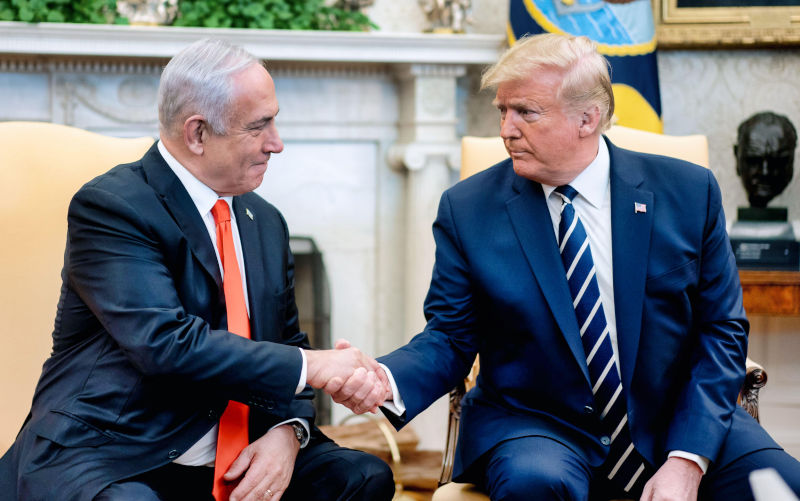
In trying to explain a need to destroy Palestine, Iran and Lebanon, President Trump and Prime Minister Netanyahu use words to justify what is unjustifiable. They dig into the language of war, which portrays simplicity, sees violence as moral, and offers an either/or, us or them choice in the conduct of world affairs.
Instead of liberating thought and encouraging creativity, the language of these war mongers exalts the idea of dominating and winning and stays blind to values other than their own. One side is civilised, the other is not.
Arrogance in the language of war is loud, justified by religiosity, largely fundamentalist and evangelical. The pronouncements of Trump, his Secretary for War Pete Hegseth, of Netanyahu and his Foreign Minister Israel Katz, display self righteous dogma as though God has recommended that there is no other way to think and act.
Trump speaks of good versus bad, and Christianity versus the devil. In his 2 April address to the American people, he proclaimed, “We’re going to bring them (the people of Iran) back to the Stone Ages where they belong.”
Needing to outdo his boss, fervent Christian nationalist Hegseth declared in a prayer meeting that the Iran war “is a cosmic breakdown between good and evil, where bullets are instruments of divine will and fallen foes are condemned to eternal hellfire.” He finished by praying for overwhelming violence against enemies and insisted, “God stands with the United States.”
Trump and his supporters have conscripted Jesus as their moral ally. For Hegseth, advocacy of war against Iran depicts US and Israeli forces in a fight where Jesus opposes Mohammed and even beats Genghis Khan.
In what he calls his defence of western civilisation, Netanyahu slaughters Palestinians and Lebanese, and claims the war with Iran is morally necessary.
Israeli Foreign Minister Katz boasts that he will send Hezbollah leaders to “the depths of hell… along with all the other members of the axis of evil.” He promises the people of southern Lebanon that the IDF will destroy their houses “ according to the Rafah and Khan Yunus model”, his proud reference to the complete destruction of those Palestinian towns.
In a culture which worships abusive power, where international law is of no consequence, another perversion exists. The means of death and destruction can be called a model.
The language of war requires that Israeli, US cruelties and war crimes be ignored. Morality comes from domination and concealment. To maintain an image of being good, the Israeli and the US public must be told ‘we are winning’ , that indispensable word to foster delusion.
The world is to believe that a war initiated by Israel, backed by the US was started by Iran. That claim is inevitable. Telling lies depends on verbs and adjectives from the delusional language of war.
In the US, political commentators have been conned and socialised. Faced with pictures from Tehran of bombed buildings and crying citizens, journalists and ex military personnel speak of spectacular early successes.
No-one asks how an estimated 3,500 killed Iranians including over 200 children may have considered their deaths the outcome of the US and Israel ‘winning’ ?
As of April 2026, the same question must be asked about 1,400 killed Lebanese, the 4,200 injured and over a million displaced, forced to flee their homes.
The cruel binary persists. The dead can be cast as losers. Killers are winners.
Another delusional word, ‘security’, is used to justify bombing and killing. Defending security is a way of winning and will also describe steps towards victory.
Words for war promote destruction not human development, repression not freedom. By contrast, political leaders and media commentators who watch the US/Israel onslaught, could remind themselves that language can be used to inquire and create, to promote freedom of thought and enlightenment.
Instead of preoccupation with novel warfare, with body counts and drone destruction, leaders could use language to depict visions of future societies, characterised by solidarity among peoples and by pursuit of justice.
Visions of freedom, peace and justice depend on a rich, life enhancing language. That goal is urgent. To express the hoped for possibilities of a common humanity will require the very opposite of the Trump, Hegseth, Netanyahu, and Katz language of war.
The views expressed in this article may or may not reflect those of Pearls and Irritations.
